1st Conference
Artificial Intelligence
& Green Computing
Humanity at the heart of innovation for a responsible and ethical future




Our Vision
A Human & Sustainable Technological Future

Humanity at the heart of innovation
Innovation is not an end in itself, but serves the needs and well-being of people.
Humans are the center of all decisions: technologies, products, services.
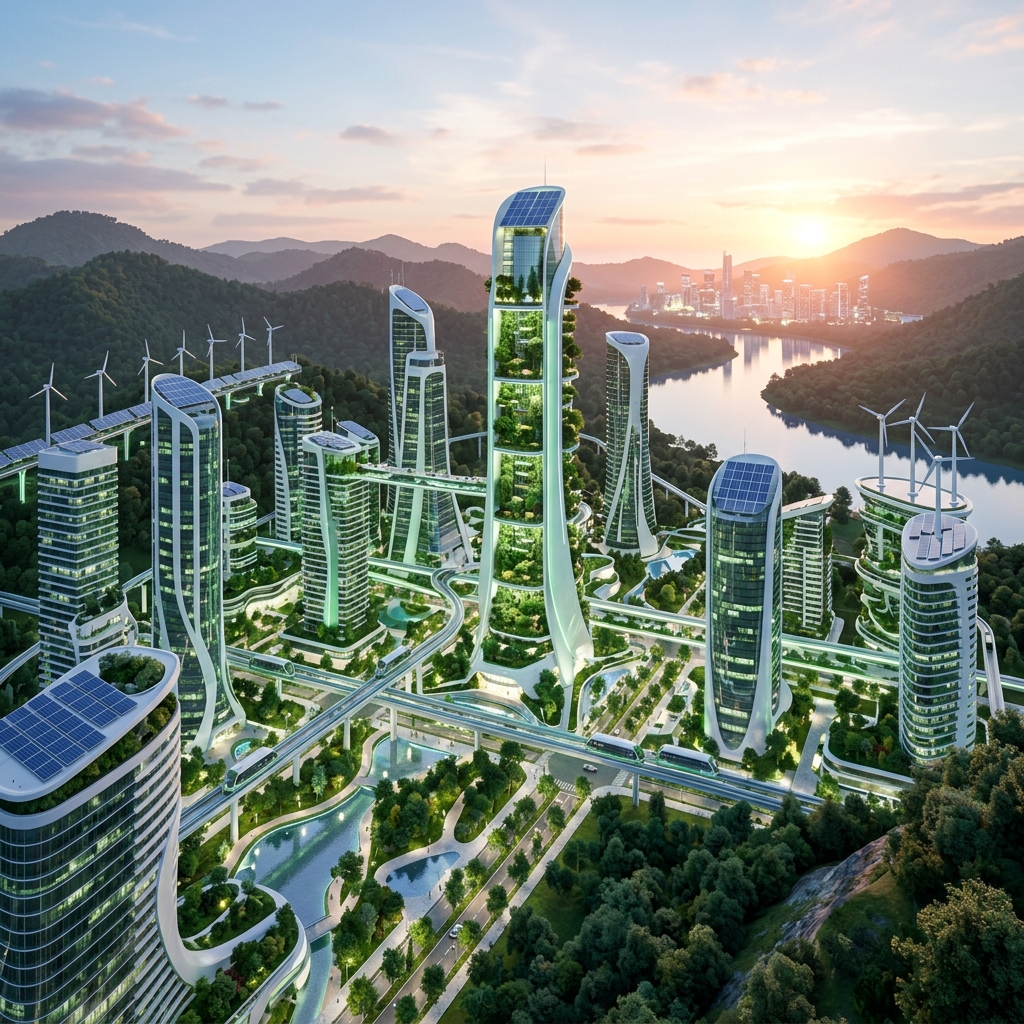
A responsible future
Innovation is designed taking into account social and environmental impacts.
It involves thoughtful and sustainable choices that do not harm society or the planet.
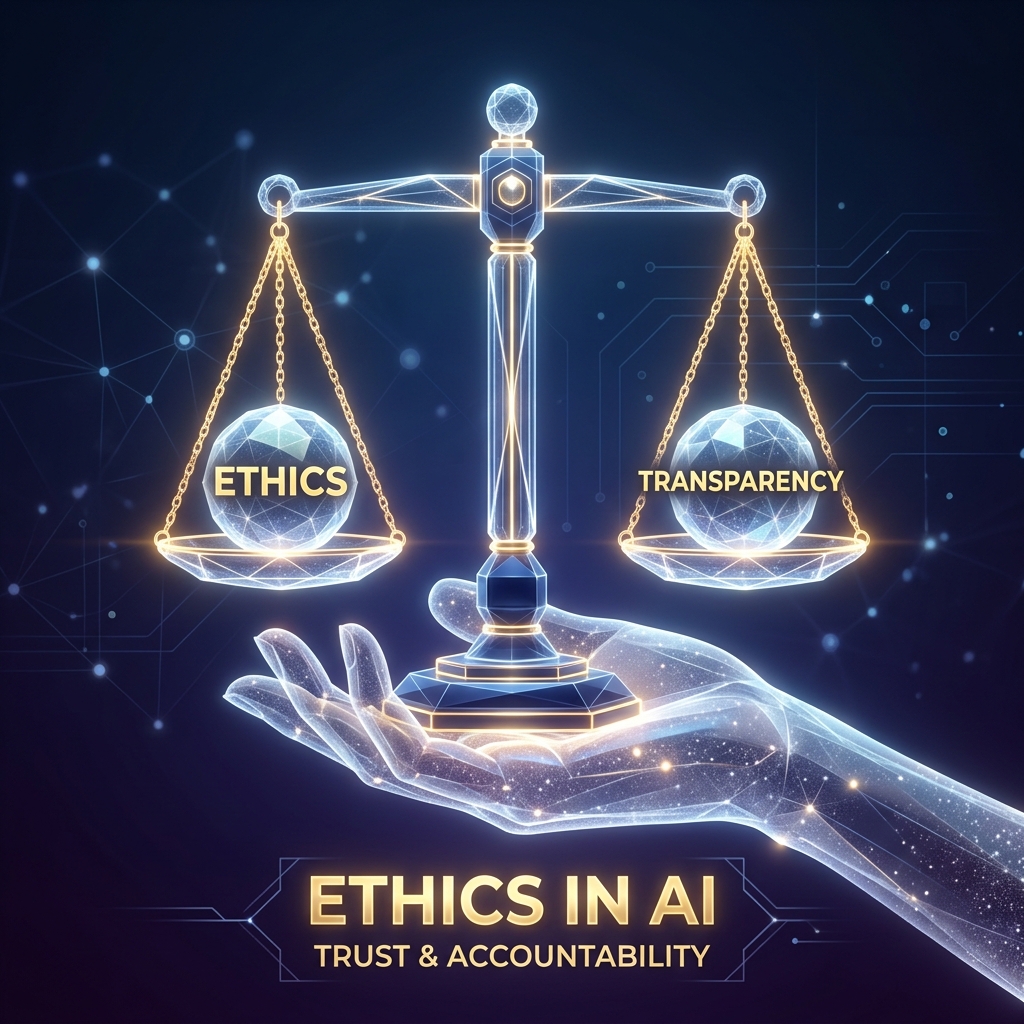
An ethical approach
Actions and creations respect moral principles: justice, transparency, equity.
Ethics ensures that innovation is honorable and respectful of all stakeholders.
Theme
The rise of AI technologies in transportation and sustainable mobility: towards an eco-designed and responsible digital landscape
This conference explores the rise of artificial intelligence technologies in a multitude of fields, including transport, smart mobility, smart cities, and ecology. To be usable in complex urban environments, these systems must process a large volume of heterogeneous data (traffic, road topology, air quality, weather, etc.), while respecting the principles of eco-designed digital technology.
The interdisciplinary dimension is at the heart of our exchanges. We welcome work from various backgrounds: finance, technology, art, music, and many others. This openness allows the question of AI energy efficiency to be addressed systemically, not only during model training but throughout the data life cycle.
Currently, 6 renowned speakers have already confirmed their participation, including Prof. Mustapha Ouladsine. The conference promises to be a crossroads of innovation and shared responsibility.
"For an environmental prediction solution to be truly aligned with its objectives, it must integrate an energy efficiency criterion in all stages of its development."

Vision 2026
Convergence: AI & Humanity
Artificial Intelligence
High-performance prediction models for transport and sustainable mobility
Green Computing
Reducing the environmental footprint of information systems
Energy Efficiency
Optimizing the energy cost of data pipelines
Environmental Impact
Design of eco-responsible decision support tools
Mobility & Smart City
Optimization of urban flows and eco-responsible transport infrastructure
Arts, Music & Culture
Exploration of digital creativity and its societal and ecological impact
Finance & Green Economy
Prediction models and algorithms for sustainable and responsible finance
Health & Sustainable Digital
AI for diagnostics and well-being with eco-designed infrastructure
Founding Frameworks of Green Computing
Green computing has been built around founding frameworks that aim to reduce the environmental footprint of information systems throughout their life cycle.
Green Use
Sober use
Green Disposal
Responsible recycling
Green Design
Sustainable design
Green Manufacturing
Ecological manufacturing
— Murugesan's four-pillar model
Sustainable AI Taxonomy
Energy measurement and metrics
Efficiency of models and architectures
System-level optimization
AI for environmental sustainability
This structuring clarifies the landscape but remains focused on models and infrastructure, leaving behind the pipeline layer that precedes learning.
— According to Zhou et al.
Core Research Questions
AI & Mobility
"What pipeline configuration and software architecture allow for a fixed level of accuracy with minimal energy cost?"
"How to optimize the latency of critical decision systems while minimizing embedded energy consumption?"
"What is the real impact of AI on urban traffic flow compared to the overall energy cost of its deployment?"
Art & Music
"How to reconcile AI-assisted artistic expression with the imperative of digital sobriety? What is the value of art under energy constraints?"
"Can digital sobriety become a new source of thematic inspiration for digital arts?"
"How can composition algorithms be 'eco-designed' without sacrificing harmonic complexity?"
Technology & Innovation
"What new software development paradigms emerge by placing energy efficiency at the same level as raw performance?"
"Is Edge Computing the ultimate answer to the hyper-consumption of centralized Cloud infrastructures?"
"How to standardize Green Computing metrics for heterogeneous data pipelines?"
Humanities & Social Sciences
"How can data governance favor a more equitable and responsible digital landscape in the face of the energy divide?"
"What are the psychological and societal barriers to the adoption of more sober but potentially less efficient AI technologies?"
"What role for public policies in regulating the carbon footprint related to artificial intelligence?"
Green computing is not just a technical optimization but a systemic and interdisciplinary approach, involving:
Programme
Discover the full programme of the IA & IV 2026 conference: 6 thematic sessions, round tables and networking time over two days.
Browse the detailed day-by-day schedule, with all talks and speakers. Download it to keep it close at hand.
Our Speakers
Researchers, artists and professionals from France, Morocco, Italy and Australia will share their work on AI and green computing.
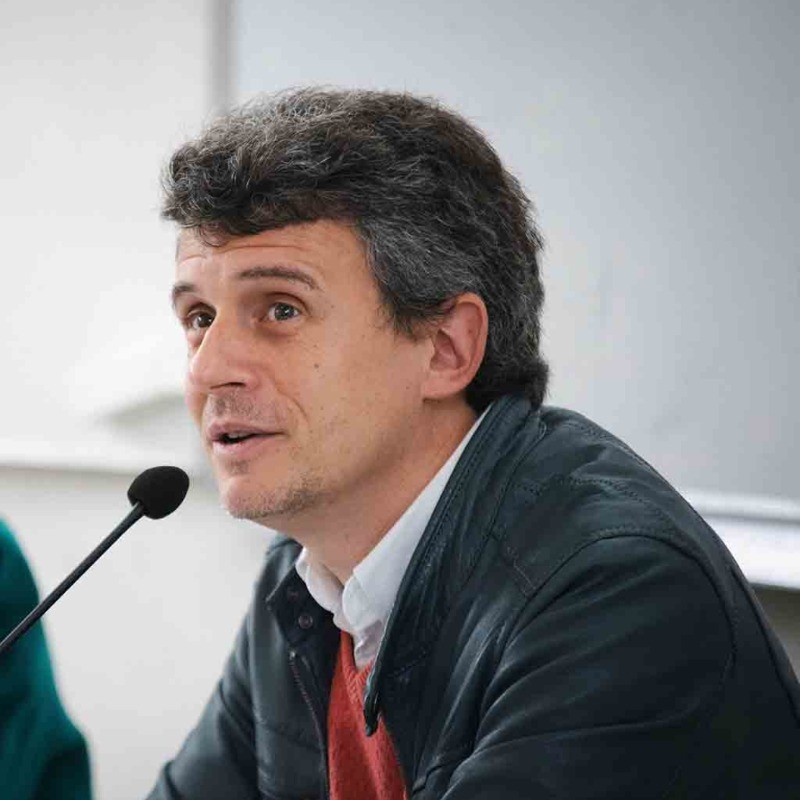
Arnaud Laimé
President of Paris 8 University
« Conference opening »

Maxime Cervulle
Vice-President of the Research Commission, Paris 8 University
« Conference opening »

Carole Brunet
Vice-President for Ecological and Social Transitions and Innovations, Paris 8 University
« Conference opening »
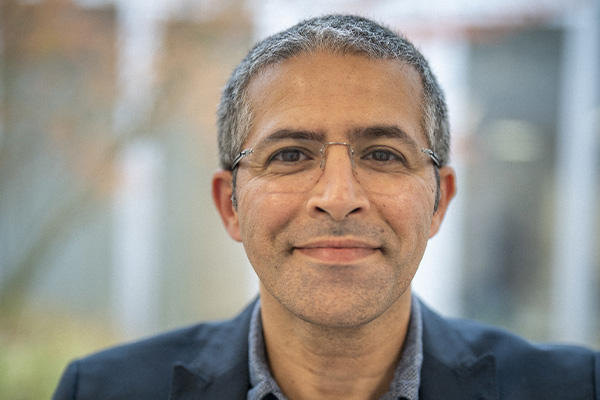
Mehdi Ammi
Vice-President for Digital & AI, Paris 8 University
« Conference opening »

Boubaker Daachi
Director of the MITSIC Faculty, Paris 8 University
« Conference opening »

Khaled Mekouar
President of ESISA, Fez, Morocco
« Conference opening »
Imad Saleh
Conference Chair, Paragraphe Lab, Paris 8 University
« Conference opening »

Khaldoun Zreik
Professor, Paris 8 University — Paragraphe Lab
« Session chair — Ecology of Generative, Symbolic & Analytical AI »

Orélie Desfriches Doria
Associate Professor, Paragraphe Lab, Paris 8 University
« Session chair — Responsible & Accessible AI in Education, and AI & Education round table moderator »

Inès Laitano
Associate Professor, Paragraphe Lab, Paris 8 University
« Session chair — Responsible & Accessible AI in Education, and AI & Education round table moderator »

Rakia Jaziri
Associate Professor, Paragraphe Lab, Paris 8 University
« Session chair — Generative & Agentic AI »

Everardo Reyes
Professor, Information & Communication, Paragraphe Lab, Paris 8 University
« Session chair — Creative Approaches »

Jean-Claude Domenget
« Round table — AI & Education »
Pierre Gedeon
« Round table — AI & Education »

Ioan Roxin
Emeritus Professor, University of Franche-Comté
« Penser la carte et le territoire : l’espace latent de l’IA générative à l’épreuve de la sobriété »

Samuel Szoniecky
Associate Professor (HDR), Paragraphe Lab, Paris 8 University
« Vers une écosophie des existences informationnelles à l’ère de l’IA »
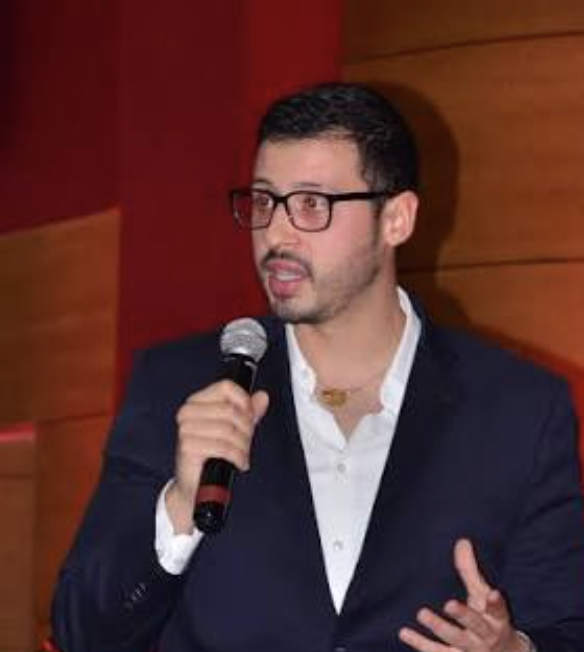
Youssef Mekouar
Lecturer-Researcher, ESISA Analytica, Fez, Morocco
« Vers une smart city durable : prédiction des émissions de CO2 du trafic parisien avec un modèle CNN-LSTM »

Thierry Gruszka
Head of Cisco Innovation Labs France
« Vers une transformation numérique responsable : exemple concret avec l’IA »
Mehdi Ammi
Professor, VP for Digital & AI, Paris 8 University
« IA et vision 3D pour l’inspection automatisée des structures et bâtiments : de l’acquisition au diagnostic »

Anass El Ayady
CREM, University of Lorraine & IRIMAS, University of Haute-Alsace
« Au-delà de la performance prédictive : vers une évaluation écologique des modèles de Deep Knowledge Tracing »

Luc Massou
Professor, University of Lorraine
« Proposition de cadre d’analyse sur le non-usage pédagogique de l’IAg à l’université »
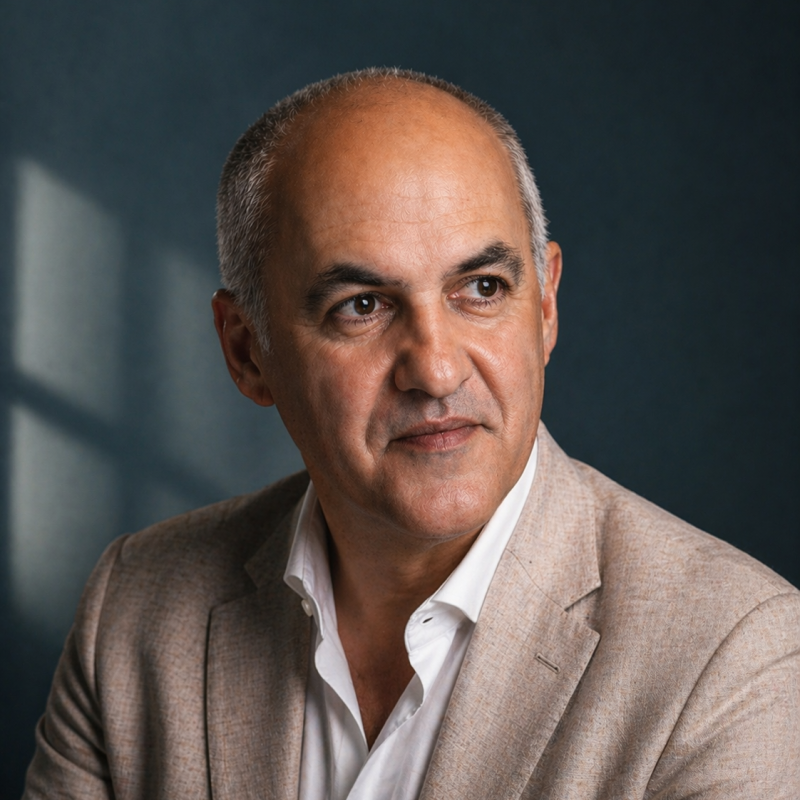
Amar Lakel
Associate Professor (HDR), Bordeaux Montaigne University, MICA Lab
« Augmenter ou déposséder : l’IA générative et la substance de la démarche scientifique en SHS »
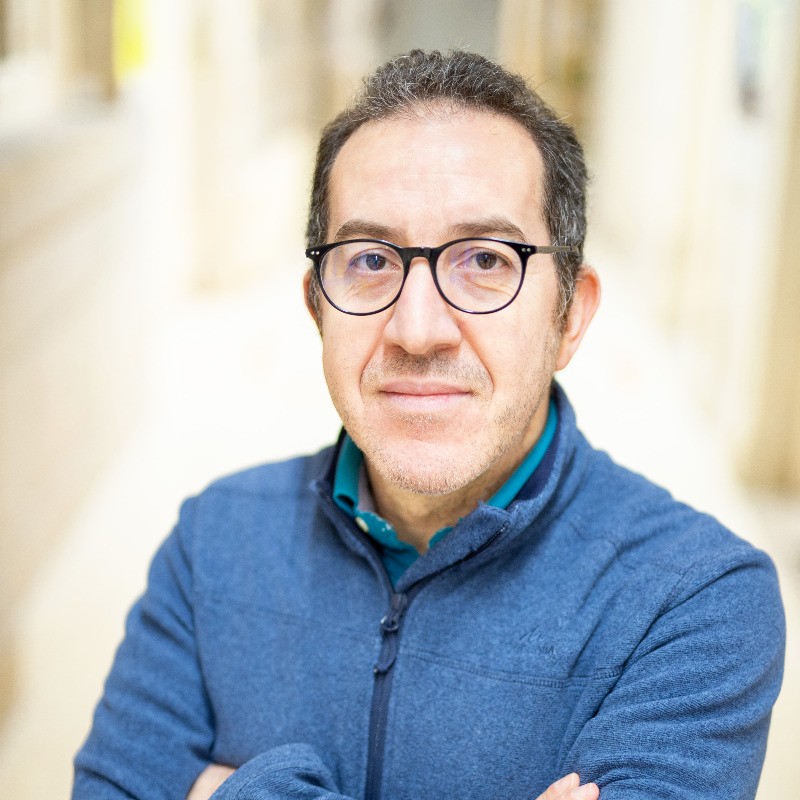
Mustapha Lebbah
Professor, UVSQ – Paris-Saclay University, President of the EGC association
« À l’ère de l’IA générative et de l’apprentissage automatique : défis et opportunités »

Larbi Boubchir
Professor, Deputy Director of the LIASD Lab, Paris 8 University
« Intelligence artificielle en biométrie : aperçu et tendances émergentes »
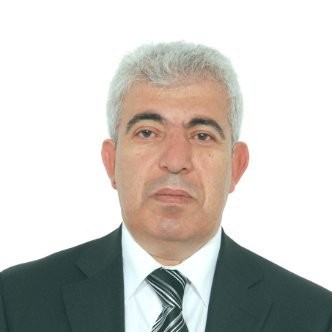
Nabil Fegaiere
Data & AI Expert (Databricks) – Linkolia
« IA agentiques : aperçu et tendances émergentes »

Mohammed Lahmer
Professor, ESISA Analytica & Moulay Ismail University, Meknes, Morocco
« L’IA agentique et la crise de formation de l’expertise »
Samuel Da Silva
Multimedia design and production
« IA générative et création de dispositifs de médiation culturelle, un exemple de générateur de fables »

Cédric Plessiet
Professor, Paris 8 University – INREV
« Architecture serveur souveraine pour un agent avatar 3D intelligent : le cas Kellynoïde »

Clio Flego
University of Genoa, Italy
« Networks to Neural Nets: Case Studies Rethinking Curatorial Practice Through AI »
Elena Abbiatici
Paragraphe Lab & Accademia Albertina, Turin, Italy
« The Lament of a Synthetic Mummy »

Daniel Binns
RMIT, Melbourne, Australia
« Small, Weird, Maintainable: Drifting Towards an Ecological Practice of Generative AI »

Marc-Éric Bobillier Chaumon
Professor at Cnam, Chair of Work Psychology
« La soutenabilité de l’IA à l’épreuve de l’activité et de la santé au travail »

Audrey Saleh
Product Manager, AI specialist
« Les startups à l’ère des IAs génératives »

Matthieu Quiniou
Associate Professor in Communication Sciences, Paragraphe Lab, Paris 8 University
« La difficile conciliation entre performance, frugalité et souveraineté dans les politiques réglementaires de l’IA générative »
Speaker photos will be added soon.
End-to-End Energy Efficiency
For a prediction solution to be aligned with its objectives, it must integrate an efficiency criterion in all stages, from ingestion to inference.
Ingestion & Data Flow
Reading traffic loops, weather and IoT sensors. Optimization of disk access and transfers with NumPy and Arrow.
Preprocessing
Massive cleaning and filtering. Study of the energy impact of moving from Pandas to Polars (Rust-driven).
Enrichment
Complex geographical joins and normalization. Optimization via lazy execution strategies.
Learning & Inference
Training deep models and deployment via PySpark for distributed scalability.
Library Choice
Quantifying how the cost varies according to the use of Pandas, Polars, NumPy or PySpark.
Execution Strategies
Arbitration between immediate and lazy execution, single-node vs distributed.
Software Configuration
Fine optimization of system parameters and dynamic resource allocation.
Research Axes
Challenges: Broad themes for global impact
From smart mobility to smart cities, the conference explores the synergies between AI and sustainable development across all sectors.
Hardware
Low-power architectures, DVFS, durability
Software
Sober algorithms, optimized code, low energy complexity
Virtualization & Cloud
Resource sharing, dynamic allocation, autoscaling
Data Centers
PUE, free cooling, renewable energies
Networks
Efficient protocols, edge computing
Life Cycle Assessment (LCA)
Environmental impact assessment method from production to end-of-life
Standards & Indicators
ISO 14001, ISO 50001, Energy Star, EPEAT, PUE
Metrics & Measurements
Quantifying the energy cost of data pipelines
Digital Art and Creativity
New modes of artistic expression in the era of AI and sobriety
Music and Algorithms
Assisted composition and environmental impact of digital sound production
Humanities and Social Sciences
Ethics, governance and societal impact of sustainable AI
Governance and Ethics
Regulation, algorithm transparency and innovation responsibility
Important Dates
Calendar
Paper Submission
Deadline to submit your contributions
Notification to Authors
Scientific committee's response
Final Papers
Submission of camera-ready papers
Early Bird Registration
Early bird registration deadline (authors)
Late Registration
Late registration deadline
Publication of Proceedings
Communication proposals (between 4000 and 5500 words) in Word format, must include:
Accepted articles will be published in the conference proceedings, in PDF format, with an ISBN and a DOI.
Other contributions may be invited to be published in international scientific journals.
Team
Co-organizers
Imad Saleh
Université Paris 8 - France
Samuel Szoniecky
Université Paris 8 - France
Youssef MEKOUAR
ESISA - ESISA ANALYTICA - Fès, Maroc
LAHMER Mohammed
ESISA - ESISA ANALYTICA - Fès, Maroc
Everardo Reyes
Université Paris 8 - France
Matthieu Quiniou
Université Paris 8 – France
Expertise
Scientific Committee
Under development and validation
Antonio Carlos Xavier
NEHTE, Universitade Federal De Pernanbuco, Brazil
Amar Lakal
University of Bordeaux, France
Aura Conci
Federal Fluminense University, Brazil
Christophe KOLSKI
Polytechnic University, Hauts-de-France
Larbi Boubchir
Paris 8 University, France
Mehdi Ammi
Paris 8 University, France
Ioan Roxin
ELLIADD, University of Franche-Comté, France
Khalid Mekouar
President of ESISA, Fes, Morocco
Participation
Contact
Participation Fees
Free
Open to everyone
Venue
Amphi: La Maison de la Recherche
Address
University Paris 8, Saint-Denis
Contact
For any questions regarding the conference, paper submission, or registration, please do not hesitate to contact us.
Managers
Imad Saleh
Youssef Mekouar
Documentation
Scientific References
Musa, A.A.; Malami, S.I.; Alanazi, F.; Ounaies, W.; Alshammari, M.; Haruna, S.I. Sustainable Traffic Management for Smart Cities Using Internet-of-Things-Oriented Intelligent Transportation Systems (ITS): Challenges and Recommendations. Sustainability 2023, 15, 9859.
Kim, M.; Schrader, M.; Yoon, H.-S.; Bittle, J.A. Optimal Traffic Signal Control Using Priority Metric Based on Real- Time Measured Traffic Information. Sustainability 2023, 15, 7637.
Shaygan, M.; Meese, C.; Li, W.; Zhao, X. Traffic prediction using artificial intelligence: Review of recent advances and emerging opportunities. Transp. Res. Part C Emerg. Technol. 2022, 145, 103921.
Foxcroft, J.; Antonie, L. Using Polars to Improve String Similarity Performance in Python. Int. J. Popul. Data Sci. 2024. 15. Saha, B. Green Computing. Int. J. Comput. Trends Technol. (IJCTT) 2014, 14, 46–51.
Rózycki, R.; Solarska, D.A.; Waligóra, G. Energy-Aware Machine Learning Models—A Review of Recent Techniques and Perspectives. Energies 2025, 18, 2810.
McKinney, W. pandas: A Foundational Python Library for Data Analysis and Statistics. Python High Perform. Sci. Comput. 2011, 14, 1–9 . 13. Bandi, R.; Amudhavel, J.; Karthik, R. Machine Learning with PySpark—Review. Indones. J. Electr. Eng. Comput. Sci. 2018, 12, 102–106.
Lin, X.; Wang, Y.; Pedram, M. A Reinforcement Learning-Based Power Management Framework for Green Computing Data Centers. In Proceedings of the 2016 IEEE International Conference on Cloud Engineering (IC2E), Berlin, Germany, 4– 8 April 2016; pp. 135–138.
Zhou, S.; Wei, C.; Song, C.; Fu, Y.; Luo, R.; Chang, W.; Yang, L. A Hybrid Deep Learning Model for Short-Term Traffic Flow Prediction Considering Spatiotemporal Features. Sustainability 2022, 14, 10039.
Biswas, S.; Wardat, M.; Rajan, H. The Art and Practice of Data Science Pipelines: A Comprehensive Study of Data Science Pipelines in Theory, in-the-Small, and in-the-Large. In Proceedings of the 44th International Conference on Software Engineering, Pittsburgh, PA, USA, 21–29 May 2022; pp. 2091–2103.
Harris, C.R.; Millman, K.J.; Van Der Walt, S.J.; Gommers, R.; Virtanen, P.; Cournapeau, D.; Wieser, E.; Taylor, J.; Berg, S.; Smith, N.J.; et al. Array Programming with NumPy. Nature 2020, 585, 357–362. Computers 2025, 14, 319 23 of 24.
Mekouar, Y. L'apport de la data science dans le développement d'une plateforme internet des objets (IdO) : GreenNav, modélisation spatio-temporelle des émissions de CO2 pour une navigation écologique assistée par IA (cas de Paris). Thèse, Université Paris 8, 2025.